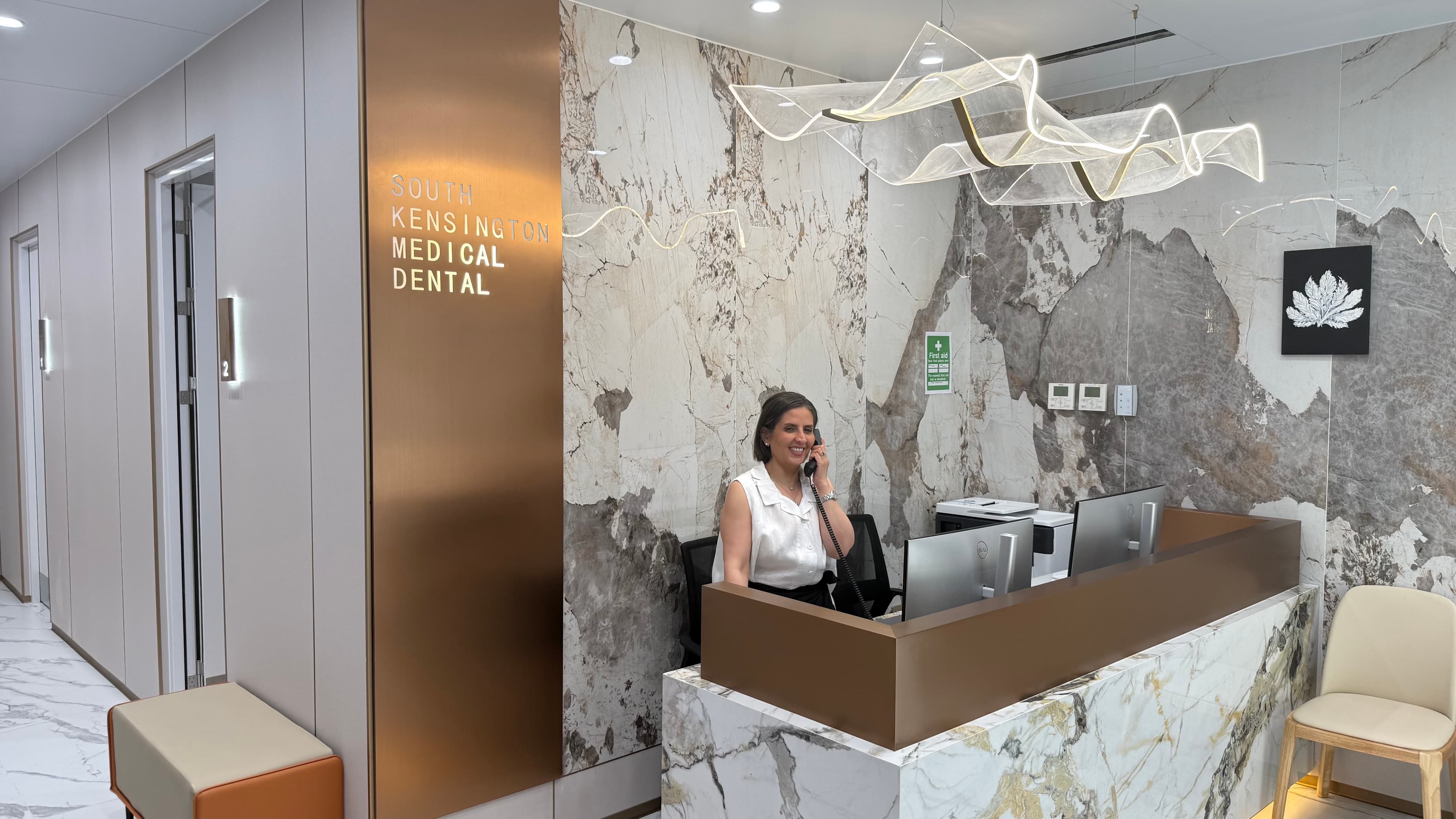
Wisdom Tooth
Removal London
Safe, gentle wisdom tooth extraction by experienced GDC-registered dentists. Simple, complicated and surgical extractions — including impacted wisdom teeth. Available at our South Kensington and City of London clinics.
Simple Extraction
From £250
Surgical Extraction
From £650
Understanding Wisdom Teeth
What Are Wisdom Teeth?
Wisdom teeth — also called third molars — are the last teeth to develop, usually appearing between the ages of 17 and 25. Most adults have four wisdom teeth, one in each corner of the mouth, although some people have fewer or none at all.
Because wisdom teeth are the last to emerge, there is often not enough space in the jaw for them to erupt properly. When this happens, a wisdom tooth may become impacted — stuck beneath the gum, only partially erupted, or growing at an angle towards the neighbouring tooth. Impacted and partially erupted wisdom teeth frequently cause pain, infection (pericoronitis), decay, gum disease and damage to adjacent teeth.
At Dental Clinic London, our experienced dentists assess wisdom teeth with digital X-rays (OPG panoramic radiographs) to determine the exact position, root anatomy and proximity to important structures such as the inferior dental nerve. We perform simple, complicated and surgical extractions in-house — providing safe, comfortable treatment with clear aftercare advice.
Do Not Ignore These Symptoms
Signs Your Wisdom Teeth Need Removing
If you are experiencing any of these symptoms at the back of your mouth, your wisdom teeth may need to be removed.
Pain at the Back of the Jaw
A dull ache or throbbing pain in the back corners of your mouth — often worse when chewing or opening your mouth wide. This is the most common reason patients seek wisdom tooth assessment.
Swollen, Red or Bleeding Gums
Swelling, tenderness or bleeding of the gum tissue around a partially erupted wisdom tooth. This often indicates pericoronitis — an infection of the gum flap covering the tooth.
Difficulty Opening Your Mouth
Restricted jaw opening (trismus) caused by swelling or infection around an impacted or partially erupted wisdom tooth. This can make eating and speaking uncomfortable.
Bad Taste or Bad Breath
A persistent unpleasant taste or odour coming from the back of your mouth, caused by bacteria and food debris trapped around a partially erupted wisdom tooth.
Recurring Infections
Repeated episodes of pericoronitis — pain, swelling and sometimes fever — that settle with antibiotics but keep coming back. This is a strong indication for removal.
Crowding or Shifting Teeth
Pressure from erupting wisdom teeth can push other teeth out of alignment, causing crowding — particularly of the lower front teeth. Early removal can prevent this.
Not sure if your wisdom teeth need removing? Book a consultation and we will assess them with an X-ray and advise you clearly.
Book an AssessmentWhy Choose Us
Wisdom Tooth Removal You Can Trust
Experienced dentists, modern techniques and a gentle approach — here is why patients choose Dental Clinic London for wisdom tooth removal.
Stop Pain & Infection
Removing a problematic wisdom tooth eliminates the source of pain, recurring infection (pericoronitis) and swelling — providing lasting relief rather than temporary fixes with antibiotics.
Prevent Damage to Other Teeth
Impacted or angled wisdom teeth can push against neighbouring molars, causing decay, root resorption or crowding. Removing them early protects your other teeth.
Reduce Risk of Cysts & Disease
Impacted wisdom teeth can develop cysts or other pathology within the jawbone. Early removal prevents these complications and preserves bone health.
Quick Recovery
Most patients recover within 5–7 days. Simple extractions often have minimal downtime — many patients return to work the next day.
Experienced, Gentle Dentists
Our GDC-registered dentists perform wisdom tooth extractions regularly and use modern techniques to make the procedure as comfortable and efficient as possible.
Open 7 Days a Week
Our South Kensington clinic is open every day, including weekends — so you can book at a time that suits you, including emergency appointments for acute pain.
Understanding Impaction
Types of Wisdom Tooth Impaction
The position and angle of your wisdom tooth determines the type of impaction and the complexity of removal. Your dentist will explain your specific case after examining your X-ray.
Mesioangular Impaction
The wisdom tooth is angled forward, towards the front of the mouth and the neighbouring molar. This is the most common type of impaction (about 45% of cases) and can cause pressure, pain and damage to the adjacent tooth.
Vertical Impaction
The wisdom tooth is in a normal upright position but is trapped beneath the gum because there is not enough space for it to erupt. Vertical impactions sometimes emerge over time but may need removal if they cause pericoronitis or are pressing on the nerve.
Horizontal Impaction
The wisdom tooth is lying completely on its side, parallel to the jawbone. Horizontal impactions almost always require surgical extraction, as the tooth is pushing directly into the roots of the neighbouring molar.
Distoangular Impaction
The wisdom tooth is angled backwards, towards the rear of the mouth. This is the least common type but can be the most complex to remove surgically, as the angle makes access more difficult.
Your Options
Types of Wisdom Tooth Extraction
The type of extraction depends on whether the tooth is fully erupted, partially erupted or impacted. Your dentist will recommend the best approach after examining your X-rays.
Simple Wisdom Tooth Extraction
For wisdom teeth that have fully erupted through the gum and are visible in the mouth. Your dentist loosens the tooth with an elevator instrument and removes it with dental forceps. The procedure is quick — often completed in under 20 minutes — and recovery is straightforward.
Complicated Wisdom Tooth Extraction
For wisdom teeth that have partially erupted, have curved or multiple roots, or sit at an awkward angle. The tooth may need to be sectioned (divided into pieces) to allow safe removal. A small amount of bone may need to be smoothed. Local anaesthetic ensures you feel no pain during the procedure.
Surgical Wisdom Tooth Extraction
For wisdom teeth that are fully impacted — trapped beneath the gum tissue and/or bone. Your dentist makes a small incision in the gum, removes a thin layer of bone covering the tooth if necessary, and may section the tooth into pieces for safe removal. The gum is then closed with dissolvable stitches.
Emergency Wisdom Tooth Removal
When a wisdom tooth causes severe pain, swelling, infection (pericoronitis) or an abscess, it needs urgent attention. We aim to see emergency patients the same day. Treatment may involve draining an abscess, prescribing antibiotics to control infection and extracting the tooth once it is safe to do so.
Your Appointment
What Happens During Wisdom Tooth Removal
Here is what to expect at each stage — from your initial consultation to recovery.
Consultation & X-Ray
Your dentist examines your mouth and takes a detailed X-ray — usually an OPG (panoramic) or periapical film. This shows the exact position, angle and root anatomy of your wisdom teeth, and their relationship to the nerve and sinus. A clear treatment plan with costs is provided before any work begins.
Local Anaesthetic
The area around the wisdom tooth is thoroughly numbed with local anaesthetic. You will feel pressure but no pain during the extraction. For anxious patients, we take extra time and use a gentle technique to ensure you are completely comfortable.
Tooth Loosening & Removal
For simple extractions, your dentist uses an elevator instrument to loosen the tooth in its socket, then removes it with dental forceps. For surgical extractions, a small gum flap is raised and the tooth may be divided into sections for easier, safer removal.
Socket Cleaning & Haemostasis
The extraction socket is thoroughly cleaned to remove any debris, infection or granulation tissue. A haemostatic dressing or suture may be placed to control bleeding and protect the socket. Dissolvable stitches are used for surgical extractions.
Aftercare Instructions
Your dentist provides detailed aftercare advice — including how to manage swelling, what to eat, how to keep the area clean and when to take pain relief. You will receive a prescription for antibiotics or painkillers if clinically needed.
Follow-Up (If Needed)
Most wisdom tooth extractions heal well without a follow-up. If stitches were placed that are not dissolvable, or if the extraction was complex, a review appointment may be arranged at 1–2 weeks to check healing.
Watch Our Clinic
What to Expect at Your Visit
Two Convenient Locations
Wisdom Tooth Removal Near You
South Kensington
Now Open20 Old Brompton Road, South Kensington, London SW7 3DL
Mon & Wed: 9 am – 6 pm
Tue & Thu: 9 am – 8 pm
Fri: 9 am – 5 pm
Sat & Sun: 10 am – 4 pm
1 min from South Kensington tube (District, Circle & Piccadilly)
City of London
Now Open5 Ave Maria Lane, City of London, London EC4M 7AQ
Mon – Thu: 8 am – 6 pm
Fri: 8 am – 2 pm
Sat & Sun: Closed
3 min from St Paul's tube (Central line) · 5 min from Blackfriars
Transparent Pricing
Wisdom Tooth Removal Prices
Clear, upfront pricing with no hidden fees. Your dentist will always provide a written treatment plan with exact costs before any work begins.
| Treatment | Price |
|---|---|
| New Patient ConsultationIncludes examination & treatment plan | £30 |
| Wisdom Tooth Extraction (Simple)Fully erupted, visible above gum line | From £250 |
| Wisdom Tooth Extraction (Complicated)Partially erupted or multi-rooted | From £450 |
| Wisdom Tooth Extraction (Surgical)Impacted beneath gum or bone | From £650 |
| X-Ray (Periapical)Focused image of wisdom tooth area | £20 |
| OPG Full-Mouth X-RayPanoramic view — essential for impacted teeth | £80 |
| Prescription (Antibiotics / Pain Relief)When clinically required | Included |
Prices are a guide and may vary depending on clinical complexity. 0% finance available on selected treatments, subject to status. A detailed treatment plan with confirmed costs is provided before any treatment begins.
Recovery Guide
After Your Wisdom Tooth Removal
Following these aftercare instructions will help you heal quickly and comfortably.
Bite on Gauze for 30–45 Minutes
Keep firm pressure on the gauze pad placed over the extraction site to help a blood clot form. Replace the gauze if it becomes soaked. Some oozing of blood-tinged saliva is normal for 12–24 hours.
Apply Ice Packs
Apply an ice pack (wrapped in a cloth) to the outside of your cheek — 20 minutes on, 20 minutes off — for the first 48 hours. This helps reduce swelling, which typically peaks at 48–72 hours.
Eat Soft, Cool Foods
Stick to soft foods — yoghurt, mashed potato, smoothies, lukewarm soup, scrambled eggs — for 3–5 days. Avoid hot, spicy, crunchy or hard foods. Do not use a straw, as the suction can dislodge the blood clot.
Avoid Smoking & Alcohol
Do not smoke for at least 72 hours (ideally 7 days) after extraction — smoking dramatically increases the risk of dry socket. Avoid alcohol for 24–48 hours as it can increase bleeding and interact with medication.
Take Pain Relief as Directed
Ibuprofen and paracetamol (taken together or alternated) are usually effective. Take them before the anaesthetic wears off. If antibiotics are prescribed, complete the full course. Avoid aspirin, which can increase bleeding.
Gentle Mouth Care After 24 Hours
Do not rinse, spit or disturb the socket for the first 24 hours. After 24 hours, gently rinse with warm salt water (½ teaspoon salt in a glass of warm water) after meals and before bed for one week.
Common Questions
Wisdom Tooth Removal FAQ
Experienced Dentists
Your Dental Team
All our dentists are GDC registered and experienced in wisdom tooth extractions — from simple to surgical. They will explain every step clearly and ensure you are comfortable throughout.

Dr. Yasha Y Shirazi
Principal Dentist & Clinical Director
GDC: 195843
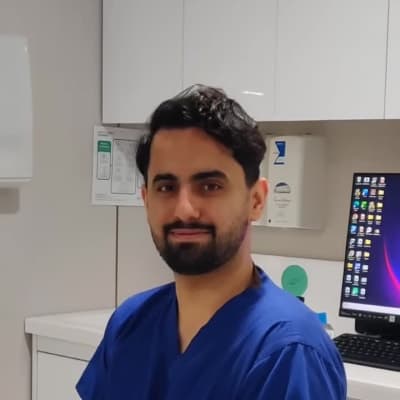
Dr. Reza Davari
Dentist
GDC: 302422
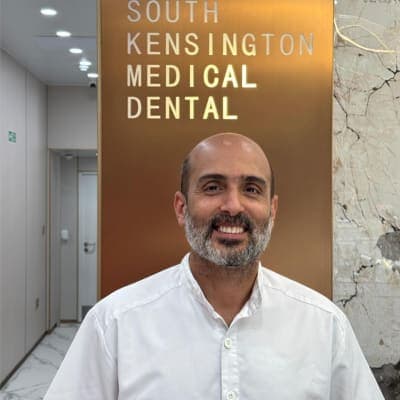
Dr. Kamran Yazdi
Dentist
GDC: 197926
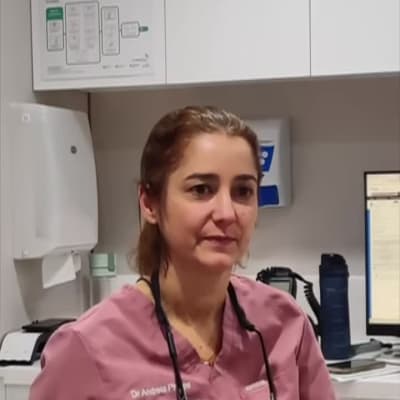
Dr. Andreia Phipps
Dentist
GDC: 229601
Patient Reviews
What Our Patients Say
Explore More
Related Treatments
Registered · Regulated · Trusted
Your Safety Is Our Priority
Our South Kensington and City of London clinics are regulated by the Care Quality Commission (CQC) and all our clinicians are registered with the General Dental Council (GDC).
CQC Regulated
Both clinics
GDC Registered
All clinicians
CQC Provider: Medical and Dental Limited · Registration No. 1-20629579981
Wisdom Tooth Pain?
Do not wait for the pain to get worse. Book a consultation to have your wisdom teeth assessed. New patient consultation just £30. Open 7 days a week.