Jaw Clenching
Awake & Night-Time
Jaw clenching refers to the forceful pressing together of the teeth — often without grinding — and may occur during the day or at night. Many people are unaware of the habit, particularly during sleep. Sustained clenching can place strain on the teeth, jaw muscles and temporomandibular joint (TMJ). A professional dental assessment is important to identify contributing factors and determine appropriate management.
New Patient Examination
Only £30 £95for new patients
Understanding the Habit
What Is Jaw Clenching?
Jaw clenching involves the sustained pressing together of the upper and lower teeth, often without the side-to-side movement seen in grinding. It can occur consciously — during moments of concentration or stress — or unconsciously, most commonly at night during sleep.
Clenching is considered a form of bruxism, a broader term covering both clenching and grinding. Because clenching often does not produce noticeable sounds, many individuals are unaware of the habit until a partner comments on it, or until symptoms such as jaw tension or morning headaches prompt investigation.
Clinical evaluation helps determine how clenching is affecting your oral and jaw health, and whether any visible signs — such as wear on the teeth, muscle tenderness or TMJ strain — are present. A dental examination forms the basis for planning an appropriate and individualised management approach.
Symptoms & Warning Signs
Jaw tightness or stiffness
A sensation of the jaw feeling locked, tight or tired — particularly on waking in the morning — is one of the most characteristic signs of night-time clenching
Facial muscle fatigue
The muscles of the cheeks and temples may feel tired or ache after periods of heavy clenching, sometimes with visible firmness or increased bulk of the jaw muscles
Headaches, especially around the temples
Persistent morning headaches concentrated around the temples are a common indicator, reflecting tension in the muscles responsible for closing the jaw
Tooth sensitivity or discomfort
Teeth may feel sensitive to temperature changes or tender when biting, even without obvious decay, due to the sustained forces placed on them
Neck or shoulder tension
Clenching can contribute to wider musculoskeletal tension, with soreness or stiffness sometimes felt in the neck, shoulders and upper back
Disrupted sleep or daytime awareness
Some individuals notice disturbed sleep or wake feeling unrefreshed, while others become aware of their teeth touching during the day when concentrating or under pressure
Symptoms vary depending on the severity and frequency of clenching. Persistent jaw discomfort, morning headaches or unexplained tooth sensitivity may all benefit from a professional dental review.
Clinical Impact
How Jaw Clenching Affects the Jaw and Teeth
Although clenching may feel like a minor habit, the forces involved can be considerable. Continuous pressure between the teeth places sustained load on the jaw muscles, particularly the masseter and temporalis muscles responsible for biting. Over time, these muscles can become fatigued, enlarged or tender.
The temporomandibular joint (TMJ) — the joint connecting the lower jaw to the skull — may also be affected. Ongoing strain on the joint and surrounding structures can contribute to symptoms such as discomfort, restricted movement, clicking or popping sensations on opening and closing.
The teeth themselves are exposed to forces that exceed those of normal chewing. Even in the absence of visible wear in the early stages, the pressure can contribute to enamel stress, microscopic cracks or sensitivity, and in time may lead to more noticeable tooth wear, cracks or damage to existing restorations. Assessment helps determine the extent of impact and guides appropriate next steps.
Contributing Factors
Common Causes and Contributing Factors
Jaw clenching is rarely caused by a single factor. Understanding the combination of influences relevant to your circumstances helps guide an effective, personalised management approach.
Stress and anxiety
Emotional stress and heightened anxiety are among the most commonly recognised triggers. Clenching can become an unconscious response to tension, occurring more frequently during periods of work pressure, major life events or disrupted routines
Concentration-related habits
Many people clench unconsciously when focused on tasks such as working at a computer, driving, studying or exercising. These daytime habits can gradually develop into a persistent pattern that also continues during sleep
Sleep disturbances
Clenching often occurs during sleep, and may be associated with disrupted sleep patterns or conditions that affect the quality of rest. In some cases, further assessment or referral may be considered to explore this relationship
Bite alignment issues
Variations in how the upper and lower teeth come together — known as the occlusion — can contribute to clenching and jaw tension. Clinical assessment of the bite is an important part of understanding contributing factors
Lifestyle factors
Certain lifestyle influences — including high caffeine intake, alcohol use, smoking and recreational stimulants — have been linked with increased clenching and grinding activity, particularly at night
Certain medications
A number of prescription medications, including some antidepressants and stimulants, can be associated with clenching and grinding as a side effect. Any concerns about medication should be discussed with the prescribing doctor
Why It Matters
Potential Risks if Not Addressed
Without recognition and appropriate management, sustained clenching may increase strain on the jaw muscles and joints, contributing to ongoing tension, fatigue and discomfort that can affect daily comfort, sleep and concentration.
Over time, some individuals develop TMJ-related symptoms — including persistent facial or jaw pain, clicking or popping of the joint, and restriction in jaw movement. These symptoms can be complex and often benefit from early assessment before they become more established.
At the same time, repetitive loading may contribute to tooth wear, cracks or fractures, as well as damage to crowns, veneers or other restorations. Persistent headaches and facial discomfort are also common. Addressing clenching early — with professional assessment and measures such as a custom night guard — can reduce the likelihood of more complex dental care being required later.
Your Options
Treatment and Management Options
Treatment depends on clinical assessment and the underlying contributing factors. Management varies based on cause, and a personalised approach is recommended following professional evaluation.
Custom Night Guards
Professionally made occlusal splints worn during sleep to help protect the teeth, ease muscle load and reduce symptoms associated with night-time clenching.
Learn MoreBite Assessment & Monitoring
Careful assessment of how the teeth come together, combined with regular monitoring of jaw function and tooth wear over time, as part of long-term management.
Learn MoreSports Guards
Custom-made appliances that can support oral protection during sports and physical activity for patients with bruxism or jaw tension.
Learn MorePrivate Dental Care
Comprehensive, personalised assessment of jaw clenching including detailed examination of the bite, muscles, teeth and TMJ function to plan appropriate care.
Learn MoreRestorative Treatment
Where clenching has contributed to tooth wear, cracks or damage to restorations, supportive restorative treatment may form part of the management plan.
Learn MoreEmergency Dental Care
Prompt review for acute symptoms linked to clenching, such as a suddenly cracked or broken tooth, severe jaw pain or difficulty opening the mouth.
Learn MoreYour First Step
Importance of Professional Dental Assessment
Jaw clenching is not always recognised by the individual themselves, particularly when it occurs at night. Professional assessment allows early signs of strain or damage — such as characteristic wear patterns, muscle tenderness or TMJ changes — to be identified before they progress further.
Your dentist will examine the teeth, assess the bite and jaw function, evaluate the muscles and TMJ, and discuss your history, lifestyle and any symptoms you may be experiencing. Where appropriate, further investigations or referral may be considered to clarify contributing factors.
From there, a personalised plan can be developed. This may combine preventive strategies with targeted measures such as a custom-made occlusal appliance, monitoring over time, and restorative care if damage has already occurred. Treatment planning is always tailored to your individual needs.
What to Expect
- 1Discussion of symptoms, lifestyle, stress levels and medical history to help identify contributing factors
- 2Clinical examination of the teeth for characteristic wear patterns, cracks and changes to restorations
- 3Assessment of jaw muscles for tenderness, fatigue and enlargement, alongside evaluation of TMJ function
- 4Review of bite and occlusion, including how the teeth come together during closure and movement
- 5Clear explanation of findings, likely contributing factors and suitable management options
- 6Personalised plan — which may include a custom occlusal appliance, monitoring and restorative care where appropriate
Two Convenient Locations
Visit Us in Central London
Assessment and treatment planning for jaw clenching and other dental concerns are available at our London clinic, where professional evaluation can help determine appropriate care options.
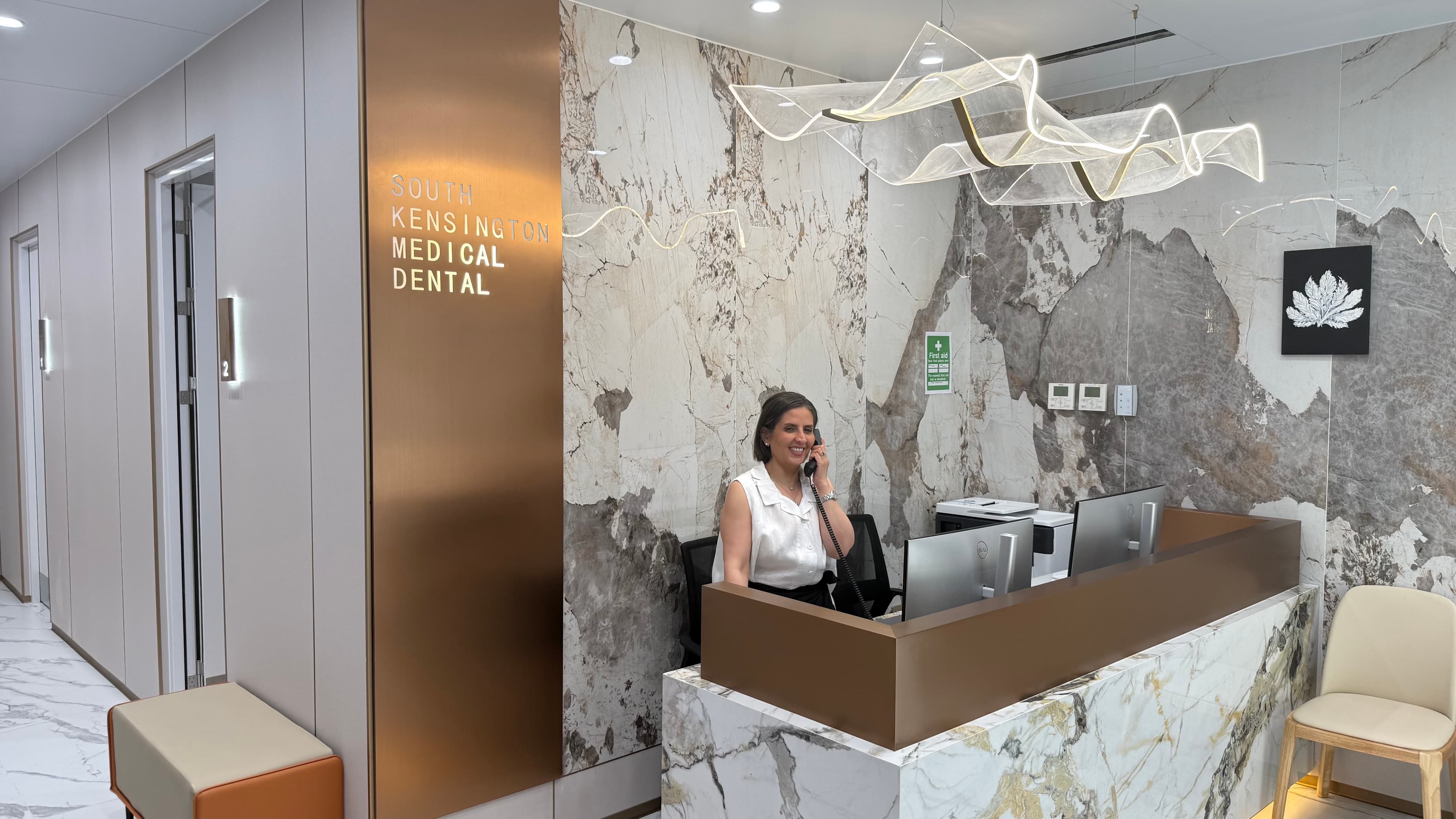
South Kensington
Now Open20 Old Brompton Road, South Kensington, London SW7 3DL
Mon & Wed: 9 am – 6 pm
Tue & Thu: 9 am – 8 pm
Fri: 9 am – 5 pm
Sat & Sun: 10 am – 4 pm
1 min from South Kensington tube (District, Circle & Piccadilly)
City of London
Now Open5 Ave Maria Lane, City of London, London EC4M 7AQ
Mon – Thu: 8 am – 6 pm
Fri: 8 am – 2 pm
Sat & Sun: Closed
3 min from St Paul's tube (Central line) · 5 min from Blackfriars
Common Questions
Jaw Clenching FAQ
Your Dental Team
Experienced Dentists
All our dentists are GDC registered and experienced in assessing jaw clenching, bruxism and TMJ-related concerns, offering calm, considered guidance and personalised care.

Dr. Yasha Y Shirazi
Principal Dentist & Clinical Director
GDC: 195843

Dr. Reza Davari
Dentist
GDC: 302422

Dr. Kamran Yazdi
Dentist
GDC: 197926

Dr. Andreia Phipps
Dentist
GDC: 229601
Patient Reviews
What Our Patients Say
Related Services
Related Treatments & Services
Registered · Regulated · Trusted
Your Safety Is Our Priority
Our South Kensington and City of London clinics are regulated by the Care Quality Commission (CQC) and all our clinicians are registered with the General Dental Council (GDC).
CQC Regulated
Both clinics
GDC Registered
All clinicians
4.9/5 Rating
Google Reviews
CQC Provider: Medical and Dental Limited · Registration No. 1-20629579981
Assessment for Jaw Clenching
Experiencing Jaw Tension or Clenching?
If you are experiencing jaw tension, discomfort, or suspect that you may be clenching your teeth, a professional dental assessment can help identify possible causes and determine appropriate management options based on your individual needs.