Composite bonding has become one of the most sought-after cosmetic dental procedures in London, and for good reason. It offers a minimally invasive approach to improving the appearance of teeth — addressing chips, gaps, discolouration, and minor misalignments — often in a single appointment and without the need for drilling or anaesthetic.
Whether you are considering composite bonding for the first time or simply researching your options, this comprehensive guide covers everything you need to know: the step-by-step process, who it is suitable for, realistic costs in London, and how to maintain your results over the long term.
Key Facts at a Glance
30–60 min/tooth
Procedure Time
Usually none
Anaesthetic
5–7+ years
Longevity
£395/tooth
Starting Price
What Is Composite Bonding?
Composite bonding is a cosmetic dental procedure in which a tooth-coloured composite resin is applied directly to the surface of a tooth. The material is carefully shaped and sculpted by the dentist to improve the tooth's size, shape, colour, or overall appearance. Unlike porcelain veneers, which are manufactured in a laboratory, composite bonding is completed chairside — meaning the entire process typically takes place in a single visit.
Because the procedure preserves the natural tooth structure (no drilling or enamel removal is usually required), it is widely regarded as one of the most conservative cosmetic treatments available. This makes it particularly appealing to patients who wish to enhance their smile with minimal intervention — an advantage shared with treatments such as professional teeth whitening.
The Procedure: Step by Step
Understanding what happens during a composite bonding appointment can help ease any apprehension. Here is a detailed look at each stage of the process:
Consultation & Shade Matching
Your dentist examines your teeth, discusses your aesthetic goals, and uses a shade guide to select a composite resin colour that matches your natural teeth seamlessly.
Tooth Preparation & Etching
The tooth surface is gently roughened using a mild phosphoric acid solution — a painless process that creates microscopic grooves for the bonding agent to grip.
Bonding Agent Application
A liquid bonding agent is applied to the etched surface, acting as a primer that creates a strong chemical bond between the natural tooth and the composite resin.
Composite Resin Sculpting
The dentist applies composite resin in thin layers, carefully sculpting each to achieve the desired form — this is the most skilled part, requiring artistic precision to replicate natural tooth anatomy.
UV Light Curing
Each layer is hardened using a UV curing light. The light activates photoinitiators within the resin, causing it to set within seconds. Multiple layers build strength and natural translucency.
Final Shaping & Polishing
Excess material is trimmed, the shape is refined, and the surface is polished to a smooth, natural-looking finish — virtually indistinguishable from surrounding enamel.
Before & After: Real Results
The visual transformation achieved through composite bonding can be remarkable. Below is a real clinical example from our South Kensington practice — a patient who presented with chipped maxillary incisors (upper front teeth). The composite bonding was completed in a single visit, restoring natural shape and symmetry.
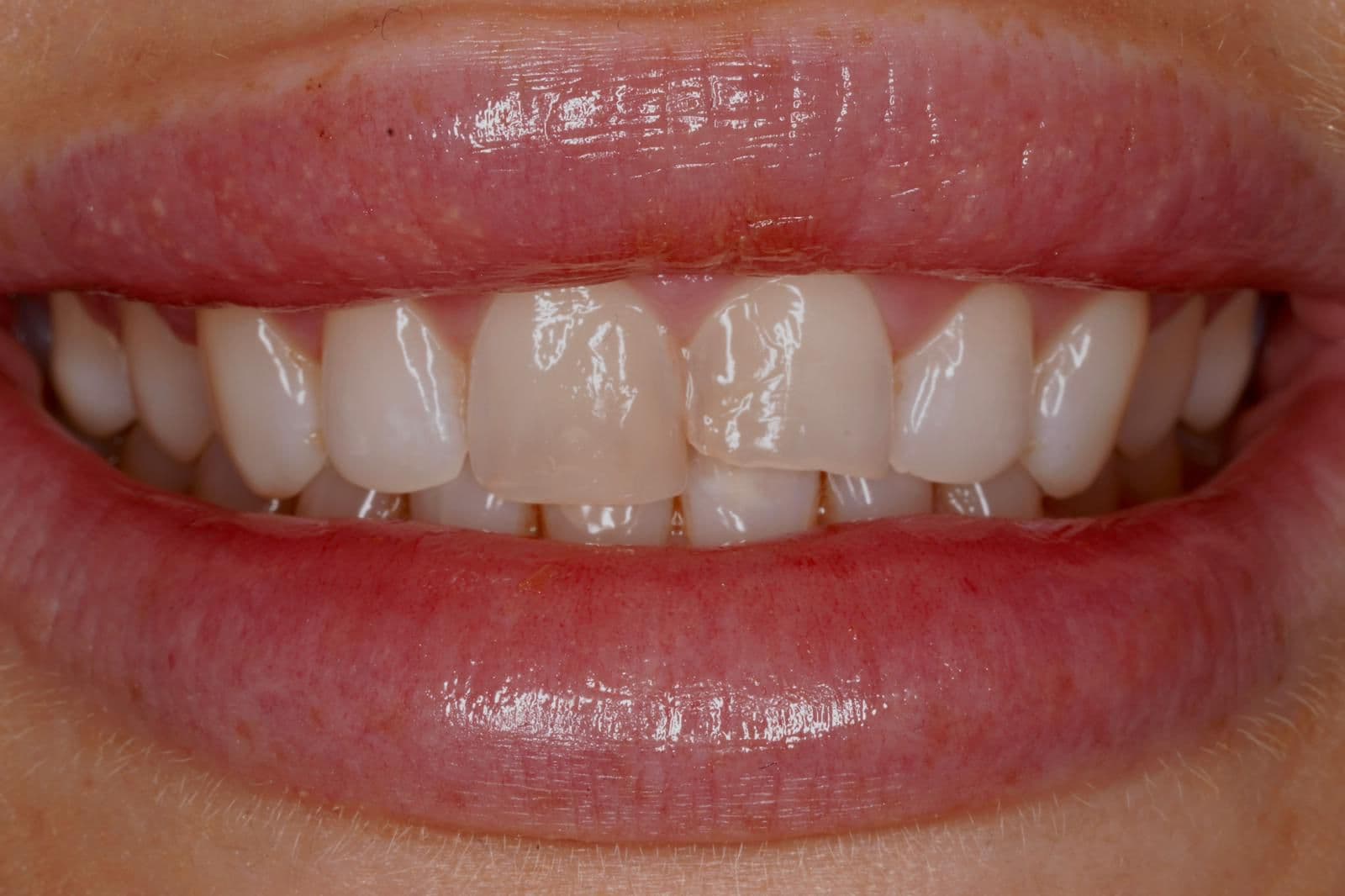
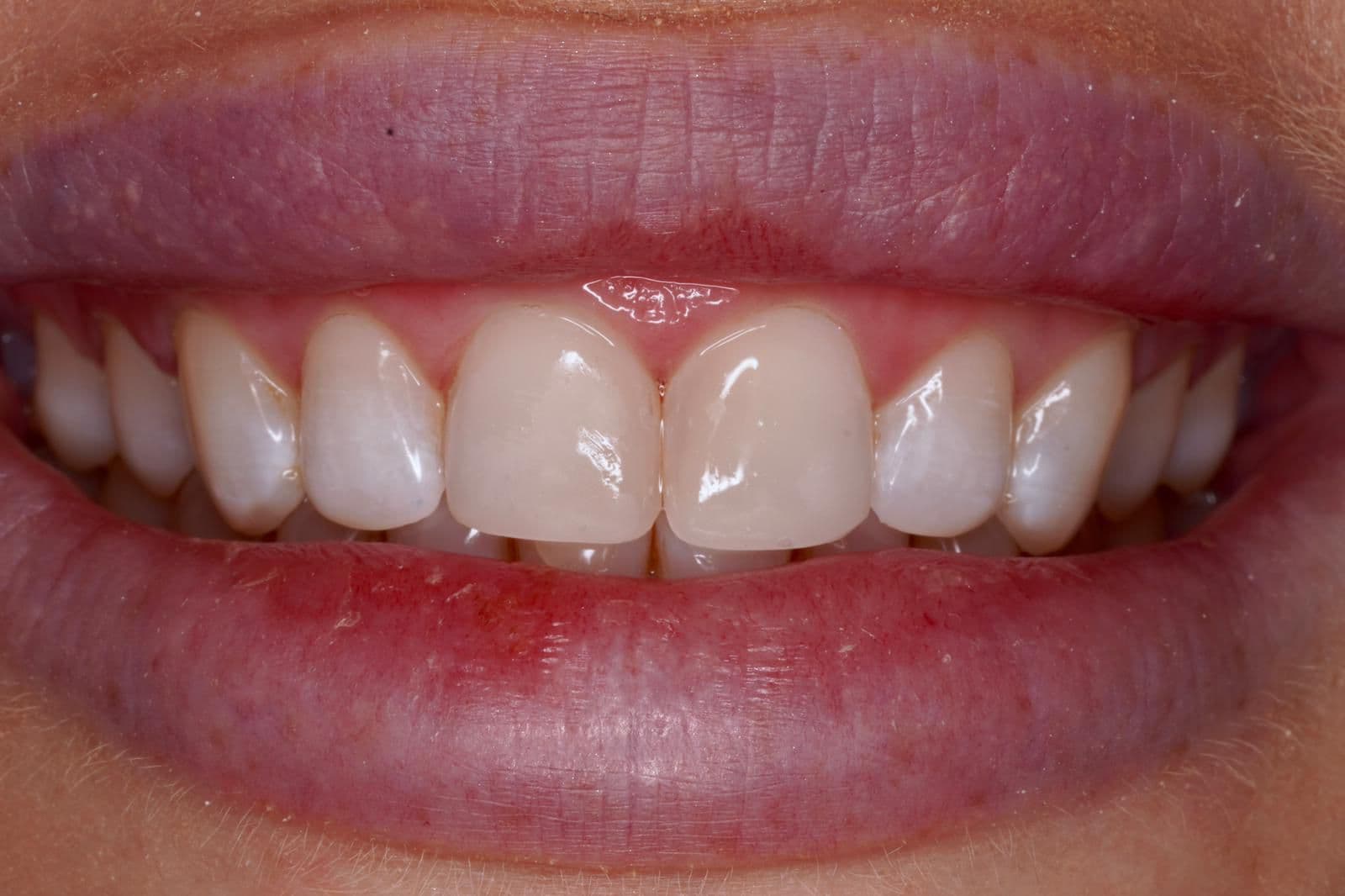
Composite bonding for chipped maxillary incisors — completed in a single visit at our South Kensington practice. Individual results may vary. A clinical assessment is required before treatment.
Composite bonding is one of the most rewarding procedures we offer. It allows us to make meaningful improvements to a patient's smile in a single visit, with no drilling and no damage to the natural tooth. When performed with precision and attention to detail, the results can be truly transformative — patients often leave the chair genuinely delighted with their smile.
Dr Yasha Y Shirazi
Principal Dentist · GDC Registered
Who Is a Suitable Candidate?
Composite bonding may be appropriate for patients who wish to address:
Chipped or fractured teeth
Restoring the original shape following minor damage
Gaps between teeth
Closing diastema for a more uniform appearance
Minor misalignments
Improving symmetry without orthodontic treatment
Discolouration or staining
Concealing intrinsic stains unresponsive to whitening
Worn or shortened teeth
Rebuilding edges worn over time
Uneven edges
Creating smooth, symmetrical tooth contours
It is important to note that composite bonding is not suitable for every clinical scenario. Patients with significant decay, advanced gum disease, or those who habitually grind their teeth (bruxism) may require alternative treatments such as dental crowns or porcelain veneers. A thorough clinical assessment is always necessary before proceeding.
How Much Does Composite Bonding Cost in London?
Cost is understandably one of the most common questions patients have. Pricing can vary considerably depending on the complexity of the case, the number of teeth being treated, and the location of the practice.
Dental Clinic London
Transparent pricing — no hidden fees
Composite Bonding
£395
per tooth
Composite Veneers
£595
per tooth
View our full fee guide for all treatments
Across the London market, prices typically range from £250 to £600 per tooth, with practices in Harley Street and the West End often commanding a premium. The variation reflects differences in clinician experience, materials used, the time allocated per appointment, and the level of aesthetic detail involved. When comparing quotes, it is advisable to consider the dentist's portfolio of previous work and the quality of materials, rather than price alone.
How Long Does Composite Bonding Last?
With appropriate care, composite bonding typically lasts between 5 and 7 years, although this can vary depending on the location of the bonding, your bite, and your daily habits. Some patients find their bonding lasts considerably longer with diligent maintenance.
Maintenance Tips
Avoid biting hard objects
Don't use bonded teeth to open packaging, bite nails, or chew ice.
Minimise staining foods
Tea, coffee, red wine, and turmeric can discolour composite over time.
Maintain good oral hygiene
Brush twice daily with a non-abrasive fluoride toothpaste and floss daily.
Regular hygiene appointments
Professional cleaning every 3–6 months maintains polish and appearance.
Wear a night guard if advised
Protects both natural teeth and bonded surfaces from grinding.
Rinse after dark drinks
A quick water rinse after coffee or wine reduces staining risk.
When composite bonding does eventually wear or discolour, it can be repaired, resurfaced, or replaced — usually without any damage to the underlying tooth. Learn more about treatment options for chipped tooth repair and composite veneers as alternatives.
Watch: Composite Bonding Explained
See the composite bonding process in action. This video provides a clear overview of what to expect during your appointment.
Video: An overview of the composite bonding procedure
Is Composite Bonding Right for You?
Composite bonding offers an accessible, conservative, and effective route to an improved aesthetic outcome. Its ability to deliver noticeable results in a single appointment — without drilling, injections, or laboratory work — has made it one of the most popular cosmetic dental procedures in London.
However, like any dental treatment, it is not universally suitable. Patients who require more extensive work may benefit from dental crowns, dental bridges, or even dental implants. For those seeking straighter teeth before bonding, clear aligners or invisible braces may be recommended as a preliminary step.
The only way to determine whether composite bonding is appropriate for your individual circumstances is through a face-to-face consultation with a qualified dental professional.
Clinical Disclaimer
This article is intended for general informational purposes only and does not constitute clinical advice. Composite bonding is a clinical procedure that may not be suitable for all patients. Individual outcomes vary depending on the patient's oral health, the complexity of the case, and other clinical factors.
A thorough examination and consultation with a GDC-registered dentist is required before any treatment can be recommended or commenced. All treatment is provided at the discretion of the treating clinician following a full clinical assessment.
Dental Clinic London is CQC registered and all clinicians are registered with the General Dental Council (GDC). Before and after photographs depict genuine patients; individual results may vary.
Ready to Transform Your Smile?
Book Your Free Consultation
Discuss your options with one of our experienced dentists at our South Kensington practice. No obligation, no pressure — just honest, expert advice.
Related Treatments You May Like
Composite Veneers
Full-coverage composite veneers completed same-day — an alternative when bonding alone isn't sufficient.
Porcelain Veneers
Lab-crafted, stain-resistant porcelain shells for a long-lasting, natural-looking transformation.
Teeth Whitening
Professional home whitening to brighten your smile — ideal before or after composite bonding.
Explore Our Treatment Pages
General Dentistry
Check-ups, hygiene, fillings, and preventive care for the whole family.
Emergency Dentist
Same-day and next-day emergency appointments in South Kensington.
Smile Makeover
Combine multiple treatments for a comprehensive smile transformation.
Orthodontics
Braces, aligners, and retainers for straighter, healthier teeth.